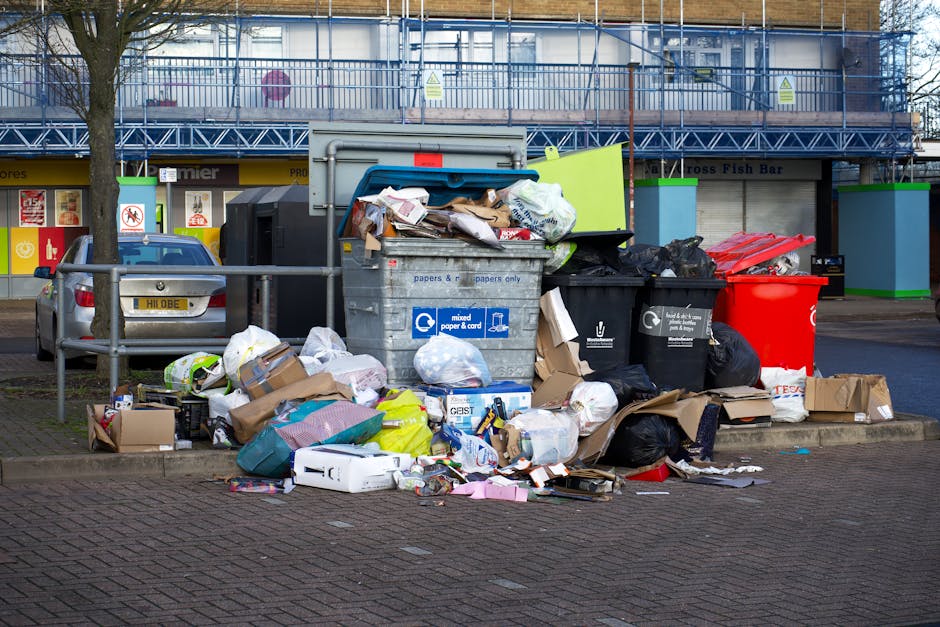
House clearance case study Maidenhead rubbish transformation
There's a particular kind of relief that comes with seeing a cluttered property turn back into a usable space. In a House clearance case study Maidenhead rubbish transformation, that shift is often bigger than people expect: one room that felt blocked, a garage nobody wanted to open, or a whole house that had slowly become unmanageable can be cleared, sorted, and made workable again. Truth be told, the hardest part is usually not the lifting. It's the decision-making, the timing, and knowing what should happen to everything once it leaves the house.
This article breaks down how a real-world style house clearance transformation is planned, what makes it go smoothly, where the common traps are, and how to judge whether a clearance service is right for your situation. If you're comparing options, planning a family move, handling an inherited property, or just trying to get your home back under control, you'll find practical guidance here without the fluff.
For readers who want to understand the wider service picture, it can also help to look at related pages such as house clearance, home clearance, and recycling and sustainability.
Table of Contents
- Why House clearance case study Maidenhead rubbish transformation Matters
- How House clearance case study Maidenhead rubbish transformation Works
- Key Benefits and Practical Advantages
- Who This Is For and When It Makes Sense
- Step-by-Step Guidance
- Expert Tips for Better Results
- Common Mistakes to Avoid
- Tools, Resources and Recommendations
- Law, Compliance, Standards, or Best Practice
- Options, Methods, or Comparison Table
- Case Study or Real-World Example
- Practical Checklist
- Conclusion
- Frequently Asked Questions
Why House clearance case study Maidenhead rubbish transformation Matters
A house clearance is not just about removing rubbish. It's about restoring space, reducing stress, and getting a property into a condition where you can move, sell, rent, renovate, or simply live more comfortably. In Maidenhead, where homes range from compact flats to larger family properties and inherited houses with years of belongings inside, the difference between "manageable" and "overwhelming" can happen fast.
A good transformation has a visible result, yes, but it also has a hidden one. It removes the mental drag that comes with walking past stacked bags, broken furniture, old boxes, and those odd items you keep meaning to sort through "next weekend". Let's face it, that weekend can disappear for months.
The transformation matters for a few practical reasons:
- It makes the property safer to move through.
- It helps prepare a home for sale, letting, renovation, or probate.
- It reduces the risk of items being damaged during a rushed DIY clear-out.
- It creates a more efficient route for reuse, recycling, and responsible disposal.
- It gives you a clean reset rather than a series of half-finished jobs.
For some households, the "rubbish transformation" is actually a mix of clearance categories: old sofas in one room, loft storage in another, a garage full of paint tins and garden waste, and maybe a few builder's leftovers after a repair job. That's why a tailored approach usually works better than a one-size-fits-all tidy-up.
Expert summary: the best house clearance results happen when the job is planned around the property, not forced into a generic skip-and-shift routine.
How House clearance case study Maidenhead rubbish transformation Works
At its simplest, the process moves from assessment to sorting to removal, but the detail matters. A proper clearance is more like a workflow than a single visit. In real life, that workflow needs to handle access, item type, recycling, and the fact that not everything inside a house is "rubbish" in the same sense.
1. Initial assessment
The first step is to understand what's actually there. Is the property lightly cluttered or heavily full? Are there bulky items, fragile items, loft contents, or mixed waste? A quick walk-through can reveal how long the job may take, what equipment may be needed, and whether there are access issues like narrow staircases or limited parking.
2. Sorting and separating
Clearance teams usually separate items into broad groups: reusable, recyclable, waste, and items requiring special handling. That sorting is where a lot of the value sits. A battered wardrobe may be dismantled for easier removal. Old furniture might be suitable for reuse or component recycling. Mixed household waste gets handled differently from garden cuttings or builders' debris.
3. Safe loading and removal
Once sorted, items are removed with care. This sounds obvious, but anyone who has tried to carry a heavy sofa down a tight hallway knows it's not a casual job. Proper lifting technique, protection for walls and floors, and sensible team coordination make a big difference. There's nothing glamorous about scratched bannisters.
4. Disposal, recycling, and final check
The last stage is disposal and recycling through the appropriate channels. Responsible teams aim to minimise waste going to landfill where possible. Some items may be reused, some broken down for material recovery, and some disposed of in the normal waste stream depending on condition and composition.
If the job includes furniture, you may also want to review furniture clearance and furniture disposal options, especially if the property contains bulky beds, wardrobes, sofas, or white goods-adjacent clutter that needs careful handling.
Key Benefits and Practical Advantages
There's a reason people often describe a completed clearance as "a weight off". It isn't just emotional language. The practical advantages are easy to see once the space is opened up again.
- Better use of space: Rooms become functional again. A spare room can become a bedroom, office, or storage area instead of a dumping ground.
- Lower stress: You stop mentally circling the same pile of stuff every time you walk past it.
- Faster property turnaround: This matters for estate agents, landlords, probate cases, and anyone preparing for tradespeople.
- Cleaner visual impression: A cleared property feels brighter, lighter, and more honest in a way. You can actually see the floor again.
- More responsible disposal: Sorting items properly supports reuse and recycling where possible.
- Reduced physical strain: You avoid multiple trips, injuries, and the awkward "how do we get this out?" moment that always appears at the worst time.
Another advantage that gets overlooked: decision clarity. Once the house is cleared, it's easier to assess what needs decorating, repair, deep cleaning, or valuation. Before that, you're mostly guessing.
Who This Is For and When It Makes Sense
House clearance is not only for extreme clutter or major life changes. In practice, it helps a wide range of people and property situations. Some jobs are urgent, some are planned, and some start off as "just a small clear-out" before quietly turning into a whole-house project. Happens all the time.
This approach makes sense for:
- Homeowners preparing to sell or renovate.
- Families dealing with probate or an inherited property.
- Landlords resetting a rental after tenant move-out.
- People downsizing to a smaller home or flat.
- Older residents needing help with accumulated belongings.
- Busy households who want a complete reset rather than weeks of DIY sorting.
- Anyone with bulky furniture, loft items, garage contents, or mixed waste that is too much for standard bin collection.
It can also be a good fit when you want the work done efficiently and respectfully. A proper clearance team is not just hauling items away; it is helping make a difficult task more manageable. That matters, especially when the property has sentimental items mixed in with rubbish.
If the situation is more about a smaller home or apartment, flat clearance can be a more relevant route. For larger residential resets, home clearance may be the better match.
Step-by-Step Guidance
If you want a smoother result, the best thing you can do is break the job into manageable stages. The good news is that you don't need to be perfectly organised before the team arrives. You just need a plan that is good enough to avoid confusion.
- Walk through the property room by room. Make a quick note of bulky items, loft contents, garage waste, and anything fragile or awkward.
- Set aside anything you definitely want to keep. Put documents, jewellery, photographs, keys, and personal files somewhere safe and separate.
- Label priority items. If certain furniture or belongings are for donation, family collection, or storage, mark them clearly.
- Check access points. Hallways, stairs, rear gates, and parking space can all affect how quickly a clearance can happen.
- Decide what needs special handling. Paint, chemicals, batteries, and some electrical items should not be treated like general rubbish.
- Book the right service. Match the property to the job type. A house full of mixed belongings is different from a garage or office clear-out.
- Confirm the disposal plan. Ask how items will be sorted, recycled, or disposed of so there are no surprises later.
- Do a final sweep before the team finishes. Small items tucked into drawers or behind furniture are easy to miss.
A small but useful tip: photograph rooms before the clearance starts. Not because you need a dramatic before-and-after social post, though fair enough if you do, but because it helps track what was in the property and what has been moved.
If the project includes upper storage or attic spaces, the loft clearance service is worth thinking about separately. Lofts are usually where the "we'll sort that later" boxes go to retire.
Expert Tips for Better Results
After enough clear-outs, a few patterns become obvious. The smooth jobs share the same habits: clear communication, realistic expectations, and a sensible order of operations.
Keep decisions simple on the day
Try not to turn the clearance into a sorting marathon. If every item becomes a debate, the job drags. Decide in advance what you are keeping, what goes, and what needs a second check. A little structure goes a long way.
Think in zones, not the whole house at once
Clearing one room fully before starting the next can feel oddly satisfying, and it helps avoid a house that looks half-done for days. If the property is large, zone-by-zone planning also keeps the work calmer and safer.
Use the job to spot hidden issues
Once clutter is removed, you may discover damp patches, cracked plaster, broken flooring, or pest signs. It's better to notice these early than after a decorator or surveyor has already arrived.
Separate sentimental items early
This one is worth stressing. A photograph tucked in a book, or a letter in a coat pocket, can easily be overlooked. Put these items aside before anything else moves.
Match the service to the waste type
Mixed household rubbish, old furniture, garden debris, and builders' leftovers all behave differently in a clearance plan. For heavier renovation material, builders waste clearance may be the more appropriate service. For messy outdoor spaces, garden clearance can save a lot of time and backache.
And yes, the kettle always seems to get put on halfway through these jobs. That's just how it goes.
Common Mistakes to Avoid
The biggest mistakes are rarely dramatic. They are usually practical little misses that create bigger problems later.
- Leaving everything until the last minute. A rushed clear-out is where items get damaged, mixed up, or forgotten.
- Assuming all waste is the same. It isn't. Different items need different handling.
- Forgetting about access. A property may be clear inside but still awkward to remove from if parking, stair access, or building rules are tight.
- Not checking what should be retained. Important papers and personal keepsakes are easy to overlook in a large clear-out.
- Choosing purely on convenience. Fast is useful, but it should still be responsible and properly managed.
- Ignoring disposal standards. If a service cannot explain how waste is handled, that is a warning sign.
Another common issue is underestimating the emotional side. Clearing a family home, for example, can be physically simple and emotionally messy at the same time. That is normal. You don't need to pretend otherwise.
For work-related spaces, a different pattern appears. Mixed filing, broken equipment, old desks, and storage boxes often need a office clearance style approach rather than a domestic one, even if the volume looks similar at first glance.
Tools, Resources and Recommendations
You don't need a warehouse of tools to prepare for a house clearance, but a few basic things make the process smoother and safer.
| Tool / Resource | Why it helps | Best used for |
|---|---|---|
| Boxes or labelled bags | Separates keep, donate, and remove items | Pre-sorting personal belongings |
| Marker pen and tape | Makes room labels and item notes visible | Room-by-room planning |
| Phone camera | Creates a quick record of what was present | Before-and-after checks |
| Dust sheets or floor protection | Helps protect surfaces during movement | Hallways, stairs, and hall landings |
| Gloves and sturdy shoes | Improves safety when handling mixed items | Sorting and moving waste |
In terms of service planning, a good starting point is to review the company's pricing and quotes information so you understand how estimates are handled, and to check the insurance and safety page if you want reassurance around property handling and risk management.
Where sustainability matters, it's also sensible to look at recycling and sustainability to see how reusable materials and waste streams are treated. That's the kind of detail that separates a neat job from a genuinely responsible one.
Law, Compliance, Standards, or Best Practice
With house clearance, the safest way to think about compliance is simple: waste must be handled responsibly, and the people doing the work should follow sensible UK waste-management practice. You do not need to become a legal expert, but you should expect a service provider to act properly, especially where household rubbish is mixed with furniture, appliances, or potentially sensitive items.
Good practice usually includes:
- sorting reusable and recyclable items where practical;
- disposing of waste through appropriate channels;
- taking care with hazardous or awkward materials;
- respecting privacy and personal belongings in the property;
- working safely around stairs, tight access, and heavy loads;
- being transparent about what is included in the service.
For homeowners, landlords, and executors, the practical concern is not just "can it be removed?" but "can it be removed properly?" That distinction matters. Especially when you are dealing with mixed waste or large quantities from a long-neglected property.
If you are comparing providers, it is sensible to check terms, payment expectations, and procedural pages such as terms and conditions and payment and security. That may sound dry, but it avoids awkward surprises later. No one wants those.
Options, Methods, or Comparison Table
There are usually three broad ways people handle a property clear-out. Each has strengths, and each has limits.
| Method | Best for | Pros | Trade-offs |
|---|---|---|---|
| DIY clearance | Small, light jobs with plenty of time | Full control, can be cheaper upfront | Time-consuming, physically demanding, disposal mistakes are common |
| Skip-based clearance | Large volumes of mixed waste from one site | Simple for heavy ongoing work | Needs space, loading effort, and sorting decisions still matter |
| Professional house clearance | Full homes, inherited properties, tight access, or urgent turnarounds | Fast, organised, less strain, more structured disposal | Costs more than doing nothing yourself, but usually saves time and hassle |
In many Maidenhead cases, the professional route wins because the job is not just about volume. It is about time, access, emotional load, and disposal responsibility. A garage full of mixed items is one thing. A whole house with layers of years in it is another thing altogether.
For specific property types, narrower services can be the smarter choice. A garage clearance might solve a storage problem quickly, while a loft clearance can unlock hidden space without disturbing the rest of the home.
Case Study or Real-World Example
Here is a realistic example of the kind of transformation people often mean when they talk about a house clearance case study in Maidenhead.
A property has been used as a catch-all for years. The front room contains stacked boxes, an old armchair, several bags of mixed rubbish, and a few items that might still be useful. The back room has broken furniture, a disused television, and general clutter. The garage is packed tighter than a Sunday car park, with old tins, small tools, garden waste, and random household leftovers. Nothing is catastrophic on its own. Together, though, it feels impossible.
The first win is access. Once the obvious pathways are opened up, the property starts to breathe a bit. The second win is sorting. Reusable furniture is separated from waste. The garden material is bundled away from the indoor items. Breakable and sentimental pieces are checked before anything is removed. Then the heavy lifting begins, and the visual change is honestly dramatic. Floor space appears. Light comes back into the rooms. You can hear your own footsteps, which sounds odd until you realise how clutter had swallowed the place.
By the end, the house is not just empty. It is usable. The hallway is clear, the garage can fit a car again, and the rooms can be cleaned or decorated without stepping over obstacles. That is the real transformation. Not perfection. Function.
In a similar case, the service may draw on a mix of house clearance, furniture clearance, and general waste removal depending on what the property contains. One size rarely fits all, and that is fine.
Practical Checklist
Use this checklist before booking or starting a clearance. It keeps the job simpler and reduces stress on the day.
- Have I removed all essential documents, jewellery, and personal items?
- Do I know which rooms or areas are being cleared?
- Are there items I want to keep, donate, or pass to family?
- Have I identified anything hazardous, fragile, or unusually heavy?
- Is parking or access going to be an issue?
- Do I need help with furniture, loft items, or garden waste?
- Have I checked whether I need house, flat, garage, or office clearance?
- Do I understand the quote, payment terms, and what is included?
- Have I asked how recycling and disposal are handled?
- Have I arranged time for a final walkthrough after the clearance?
If you are working through a wider property reset, it may also be worth checking the company's about us page to understand the service approach and values. Small detail, yes, but sometimes that is exactly what helps you feel comfortable.
Conclusion
A strong house clearance transformation in Maidenhead is about more than getting rid of rubbish. It is about reclaiming a property, reducing pressure, and creating a clean starting point for whatever comes next. Whether the job is a full family home, an inherited property, a loft full of forgotten things, or a garage that has quietly become a storage cave, the same principle applies: sort carefully, remove safely, and leave the space better than you found it.
The best results come from clear planning, realistic expectations, and a service that understands both the physical and practical sides of the job. When that happens, the transformation feels immediate. Almost surprising, even. One minute you are looking at clutter; the next, you are looking at a room again.
Get a free quote today and see how much you can save.
And if you are still at the stage of staring at the mess and wondering where on earth to begin, start small. One room, one bag, one decision. That is enough to get moving.
Frequently Asked Questions
What does a house clearance case study in Maidenhead usually include?
It usually describes how a property was assessed, sorted, cleared, and made usable again. That can involve furniture, general rubbish, loft contents, garage items, and recycling decisions. The point is to show the practical process, not just the before-and-after picture.
How long does a house clearance transformation take?
It depends on the size of the property, the amount of waste, and the access. A small flat may be straightforward, while a cluttered house with loft and garage contents will take longer. The real answer is: it varies more than people expect.
Can a clearance company remove furniture and general rubbish together?
Yes, in many cases they can. Mixed loads are common in house clearances. Furniture, household waste, and bulky items are often removed as part of one planned job, as long as the service is set up for that type of work.
What should I keep before a house clearance starts?
Keep personal documents, passports, keys, jewellery, medication, family photos, and anything with sentimental or legal importance. If you are unsure, put it aside first and sort it later. That is usually the safest approach.
Is house clearance the same as rubbish removal?
Not quite. Rubbish removal is often about taking away waste. House clearance is broader and may include sorting, furniture removal, reusable items, and a full property reset. The two overlap, but they are not identical.
What happens to items that can still be reused?
Reusable items are often separated before disposal. Depending on condition, they may be reused, recycled, or treated as part of a responsible disposal plan. The important part is that they are not automatically treated as rubbish.
Do I need a garage clearance or a full house clearance?
If the issue is mostly one area, such as the garage, a targeted clearance may be enough. If several rooms, lofts, and storage spaces are affected, a broader house clearance is usually more practical. The scale of the clutter should guide the choice.
What is the best way to prepare for a clearance visit?
Make pathways clear, set aside items you are keeping, and label anything that needs special attention. It also helps to confirm access arrangements and parking. A little preparation really does make the day smoother.
How do I know if the service is handling waste properly?
Look for clear explanations of sorting, recycling, safety, and disposal practices. Pages like recycling and sustainability and health and safety policy can help you understand the provider's approach.
Is a house clearance useful before selling a property?
Yes, very much so. Clearing a property can improve presentation, make cleaning easier, and help buyers or valuers see the space properly. It also makes follow-on work like decorating or repairs much simpler.
What if the property has a mix of household waste and building debris?
That is common enough. A mixed property may need a combination of house clearance and builders waste clearance. Keeping those waste types separate in planning helps the job go more smoothly.
Where can I learn more before booking?
It helps to read the service pages that match your situation, check the company's background on about us, and review pricing and quotes so you know what to expect. A quick bit of reading now can save a lot of uncertainty later.